
Quick Answer
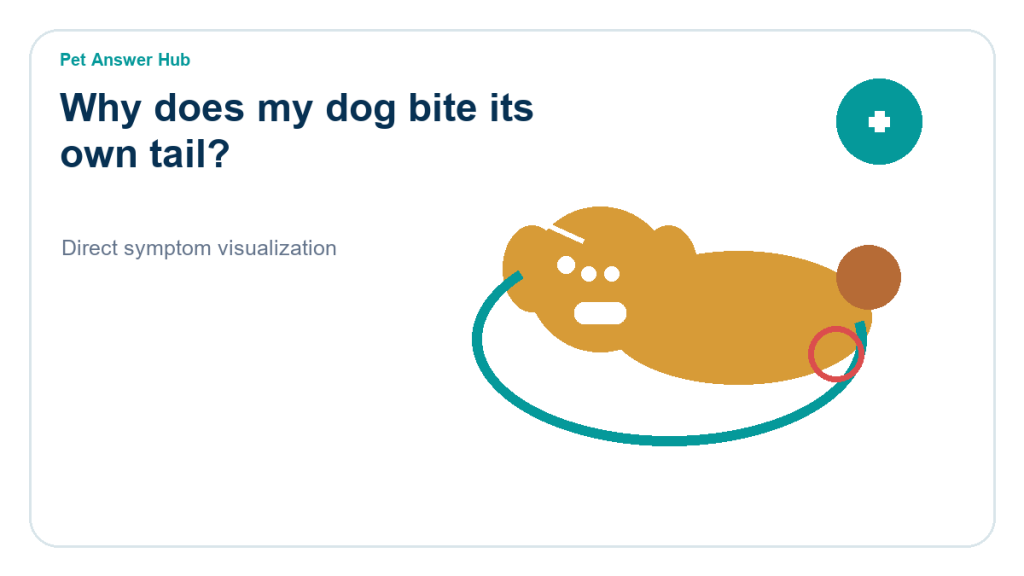
Why does my dog bite its own tail can come from fleas, allergy, anal gland discomfort, pain, anxiety, or compulsive behavior. Repeated tail biting can damage skin and should be checked if it is frequent, intense, or causes sores.
Severity
Causes
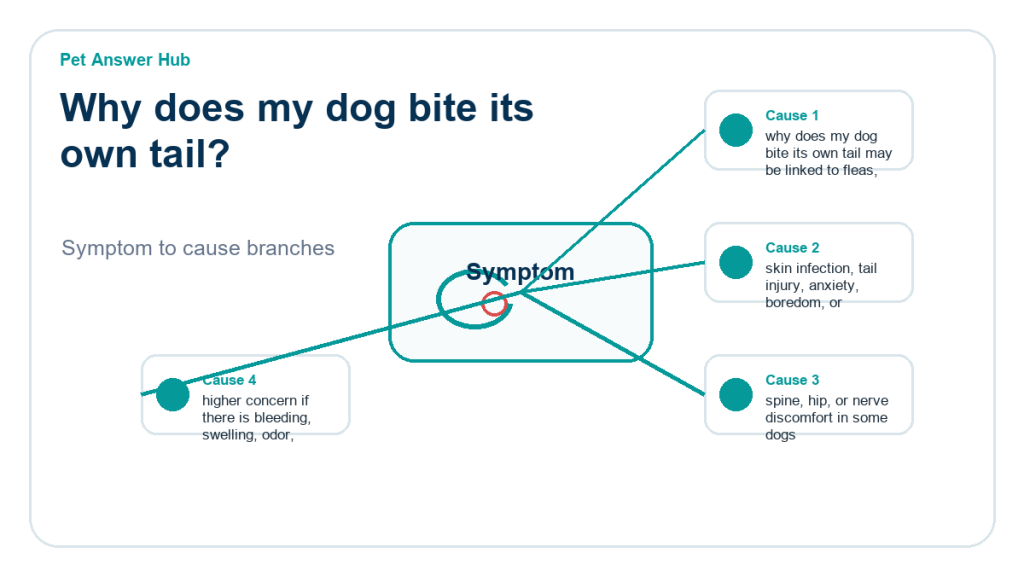
- why does my dog bite its own tail may be linked to fleas, itch, allergy, anal gland discomfort, or pain
- skin infection, tail injury, anxiety, boredom, or compulsive behavior
- spine, hip, or nerve discomfort in some dogs
- higher concern if there is bleeding, swelling, odor, sores, or repeated spinning
Action Steps
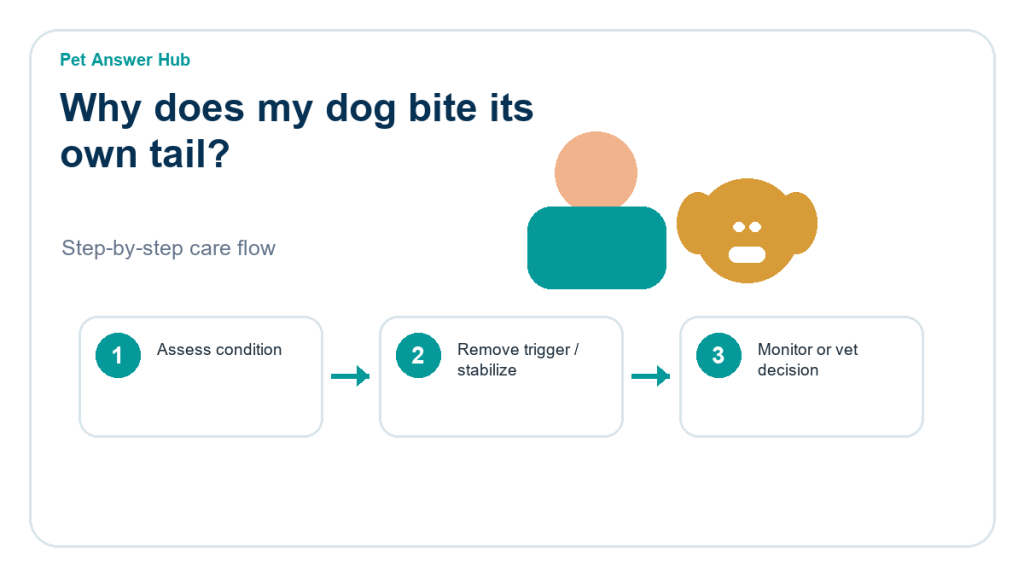
- Identify when the behavior started and whether it followed stress, food, exercise, visitors, other dogs, or being left alone.
- Check appetite, water intake, stool, urination, breathing, gum color, mobility, skin, paws, and pain signs.
- Reduce triggers, use distance or barriers when needed, and keep your dog away from unsafe items or conflict.
- Contact a veterinarian if the behavior is sudden, intense, repeated, worsening, or paired with physical symptoms.
Vet Guidance
- See a vet if tail biting repeats, damages skin, causes bleeding, or appears with scooting or odor.
- Urgent care is needed if the tail is swollen, severely painful, or injured.
- Prevent further chewing with safe supervision while arranging care.
FAQ
Is why does my dog bite its own tail serious?
Why does my dog bite its own tail can be mild in some contexts, but it becomes more serious when it is sudden, repeated, intense, unsafe, or paired with appetite loss, pain, breathing changes, vomiting, diarrhea, or weakness.
When should I worry about tail biting in my dog?
Worry if the behavior escalates, causes injury, repeats often, appears suddenly, or comes with collapse, bloating, pale gums, limping, house soiling, or major appetite changes.
Can stress cause why does my dog bite its own tail?
Yes. Stress, fear, schedule changes, separation, noise, new people, or other dogs can trigger behavior changes, but medical causes should be considered when the behavior is new or unusual.
What should I check at home for why does my dog bite its own tail?
Check breathing, gum color, belly size, appetite, water intake, stool, urination, mobility, skin, paws, pain, and whether a clear trigger happened first.
Should I call a vet for why does my dog bite its own tail?
Call a vet if the behavior persists, repeats, escalates, or appears with any physical symptom. Seek urgent care for bloating, breathing distress, collapse, head pressing, severe pain, or toxin exposure.
Disclaimer
Pet Answer Hub provides general informational content only. It cannot diagnose your pet, replace a veterinarian, or provide emergency medical advice. If your pet seems very sick, is in pain, has trouble breathing, collapses, has repeated vomiting, or you are unsure, contact a veterinarian or emergency clinic promptly.