
Quick Answer
Why is my cat coughing after eating dry food may come from airway irritation, hairballs, asthma, infection, dry food irritation, allergies, or throat inflammation. Coughing that is frequent, worsening, paired with sneezing, breathing changes, or appetite loss should be checked by a veterinarian.
Severity
Causes
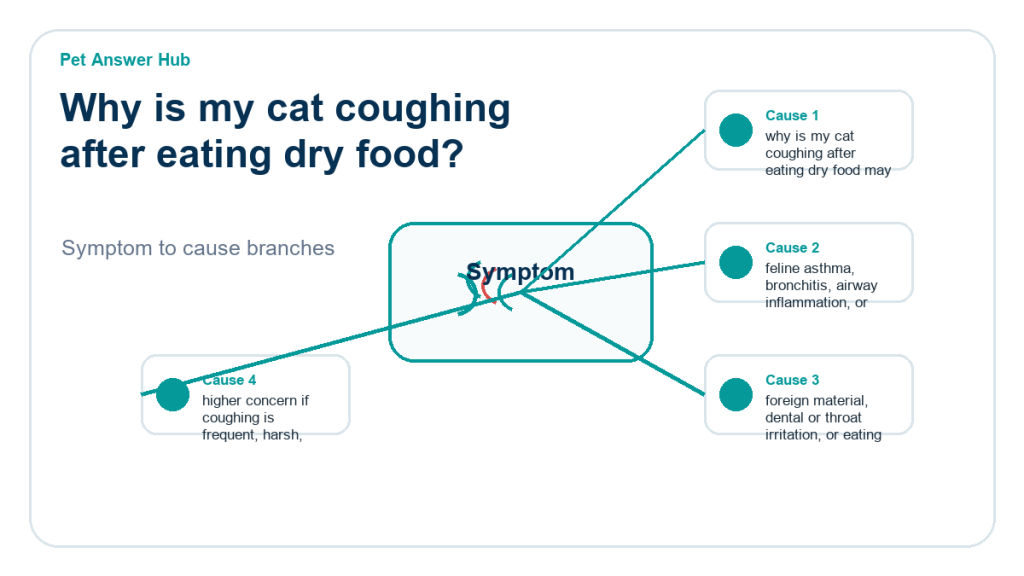
- why is my cat coughing after eating dry food may be linked to hairballs, throat irritation, dry food dust, allergies, or respiratory infection
- feline asthma, bronchitis, airway inflammation, or nasal drainage
- foreign material, dental or throat irritation, or eating too quickly
- higher concern if coughing is frequent, harsh, paired with wheezing, or affects breathing
Action Steps
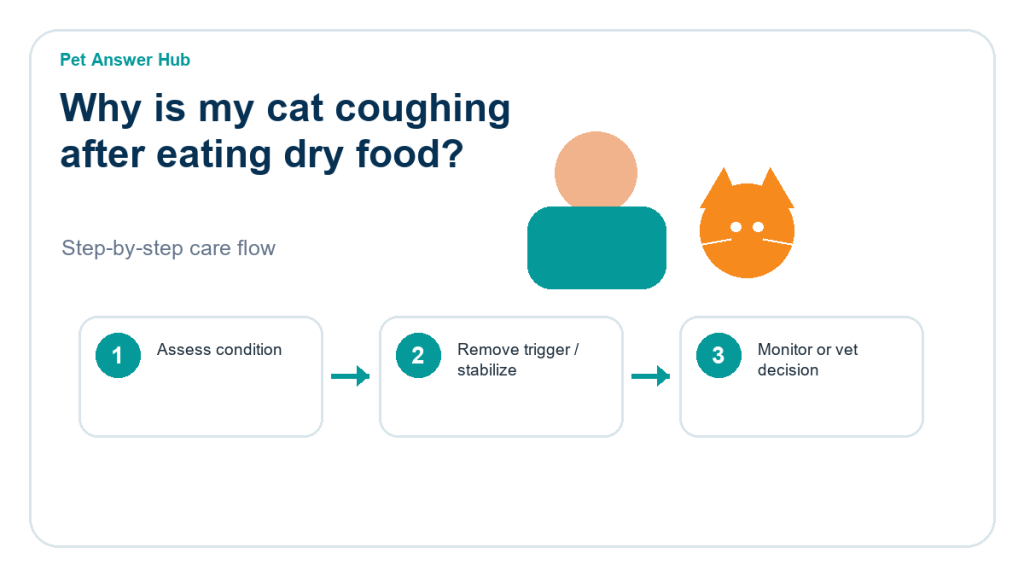
- Note when coughing happens, such as after eating, after drinking, at night, or around dust or litter.
- Remove smoke, dusty litter, sprays, and strong odors from your cat's environment.
- Offer calm rest and monitor appetite, breathing, sneezing, nasal discharge, and energy.
- Contact a vet if coughing repeats, worsens, or appears with breathing effort or appetite change.
Vet Guidance
- See a vet if coughing happens daily, becomes frequent, or appears with wheezing, sneezing, fever, or lethargy.
- Urgent care is needed if your cat has labored breathing, open-mouth breathing, blue gums, or collapse.
- Bring a video of the cough because coughing, gagging, and hairball retching can look similar.
FAQ
Is why is my cat coughing after eating dry food serious?
Why is my cat coughing after eating dry food can be serious if it is sudden, repeated, worsening, or paired with not eating, hiding, vomiting, weakness, breathing changes, pain, or abnormal behavior.
When should I worry about coughing in my cat?
Worry if the sign happens at rest, lasts more than a short period, keeps returning, or appears with appetite loss, lethargy, vomiting, pain, or litter box changes.
What should I check at home for why is my cat coughing after eating dry food?
Check breathing, appetite, water intake, litter box output, gum color, energy, pain, vomiting, hiding, walking, and whether the symptom is improving or worsening.
How long should I monitor coughing before calling a vet?
Mild signs can sometimes be watched briefly, but breathing problems, repeated vomiting, not eating, toxin exposure, or abnormal behavior should not be casually monitored.
Can why is my cat coughing after eating dry food be an emergency?
Yes. It can be an emergency with labored breathing, open-mouth breathing, repeated vomiting, collapse, toxin exposure, seizures, severe weakness, or abnormal pupils with strange behavior.
Disclaimer
Pet Answer Hub provides general informational content only. It cannot diagnose your pet, replace a veterinarian, or provide emergency medical advice. If your pet seems very sick, is in pain, has trouble breathing, collapses, has repeated vomiting, or you are unsure, contact a veterinarian or emergency clinic promptly.