
Quick Answer
Why is my dog suddenly clingy and anxious may be caused by anxiety, pain, cognitive changes, nausea, urinary urgency, noise, environmental stress, or a medical problem. New clinginess, pacing, or not sleeping should be checked if it is sudden, repeated, or paired with physical symptoms.
Severity
Causes
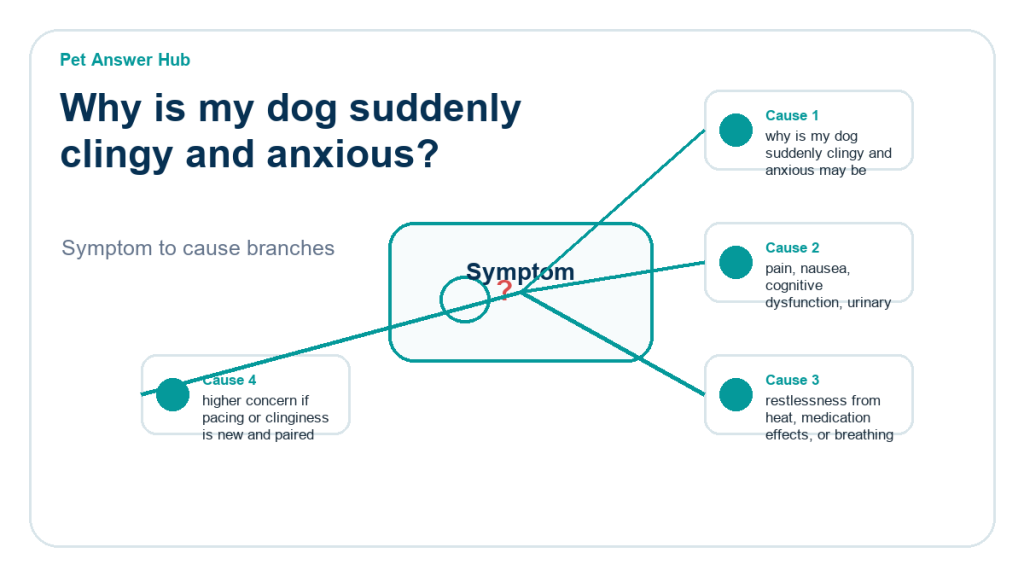
- why is my dog suddenly clingy and anxious may be linked to anxiety, stress, noise, routine change, or fear
- pain, nausea, cognitive dysfunction, urinary urgency, digestive discomfort, or illness
- restlessness from heat, medication effects, or breathing discomfort
- higher concern if pacing or clinginess is new and paired with panting, vomiting, whining, or not eating
Action Steps
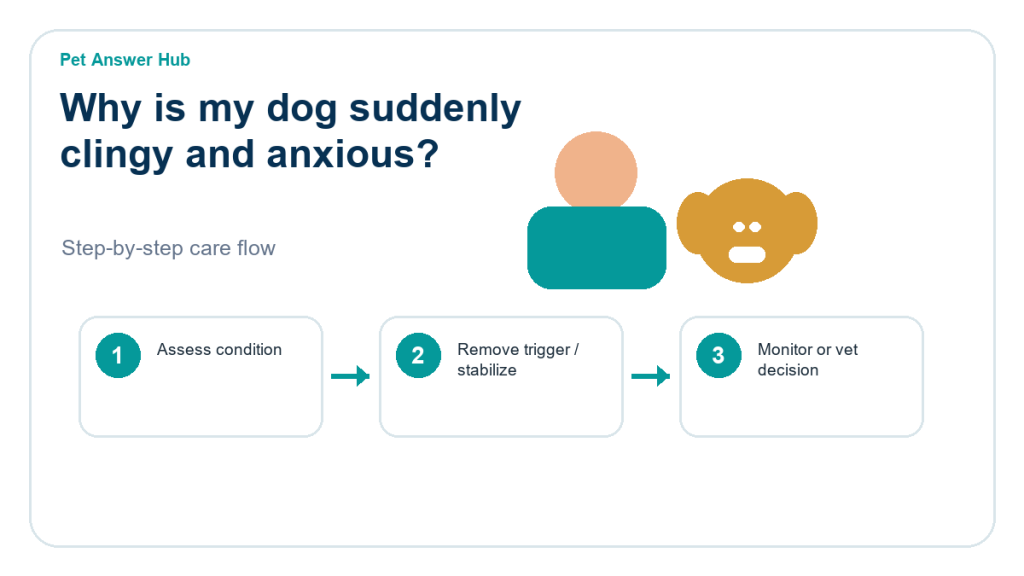
- Check for pain, belly discomfort, urination needs, breathing changes, vomiting, and appetite loss.
- Keep your dog in a quiet, predictable area and reduce nighttime triggers.
- Do not punish pacing, whining, or clinginess; track when it starts and what improves it.
- Call a vet if the behavior is sudden, persistent, or paired with health changes.
Vet Guidance
- See a vet if pacing, clinginess, or sleeplessness is new, persistent, or paired with panting, pain, vomiting, or appetite loss.
- Urgent care is needed for bloat signs, labored breathing, collapse, pale gums, or severe distress.
- Older dogs with new nighttime pacing should be checked for pain or cognitive changes.
FAQ
Is why is my dog suddenly clingy and anxious serious?
Why is my dog suddenly clingy and anxious can be serious if it is sudden, repeated, worsening, or paired with not eating, vomiting, weakness, pain, breathing changes, pale gums, or abnormal behavior.
When should I worry about anxiety in my dog?
Worry if the sign lasts beyond a short recovery period, keeps returning, or appears with lethargy, vomiting, diarrhea, pain, collapse, or breathing effort.
What should I check at home for why is my dog suddenly clingy and anxious?
Check breathing, gum color, appetite, water intake, vomiting, stool, walking, pain, belly size, temperature exposure, and whether the symptom improves or worsens.
How long should I monitor anxiety before calling a vet?
Mild signs can sometimes be watched briefly, but breathing trouble, repeated vomiting, eye pain, bloat signs, toxin exposure, or severe weakness should not be monitored at home.
Can why is my dog suddenly clingy and anxious be an emergency?
Yes. It can be an emergency with labored breathing, heatstroke signs, bloat, collapse, pale or blue gums, severe pain, repeated vomiting, or toxin exposure.
Disclaimer
Pet Answer Hub provides general informational content only. It cannot diagnose your pet, replace a veterinarian, or provide emergency medical advice. If your pet seems very sick, is in pain, has trouble breathing, collapses, has repeated vomiting, or you are unsure, contact a veterinarian or emergency clinic promptly.