Quick Answer
Can dogs eat turkey bones? No. Bones can splinter, choke, break teeth, injure the mouth or gut, or cause constipation and blockage, especially cooked poultry bones.
Severity
Causes
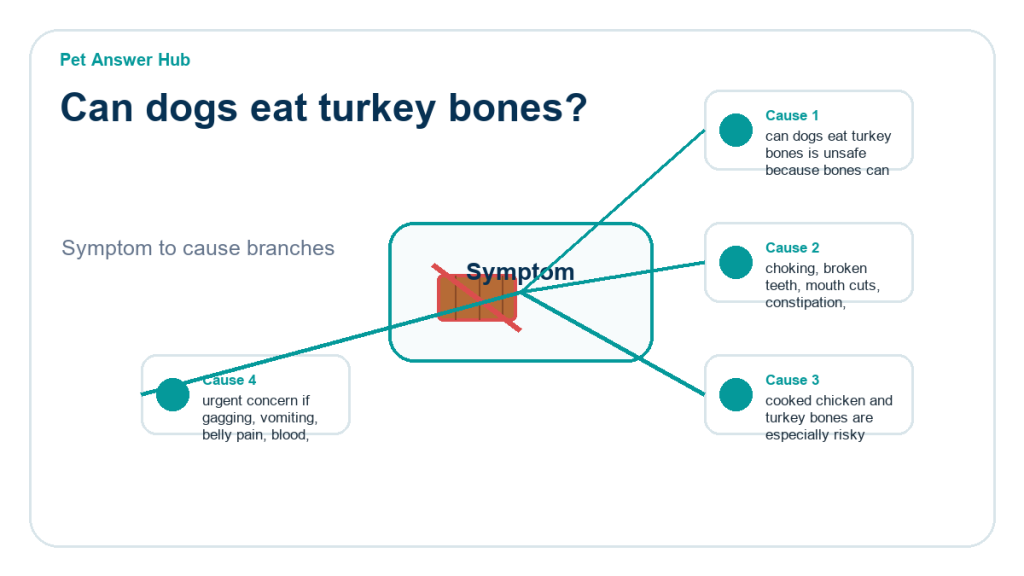
- can dogs eat turkey bones is unsafe because bones can splinter or lodge in the digestive tract
- choking, broken teeth, mouth cuts, constipation, perforation, or intestinal blockage can occur
- cooked chicken and turkey bones are especially risky because they can splinter sharply
- urgent concern if gagging, vomiting, belly pain, blood, straining, or weakness appears
Action Steps
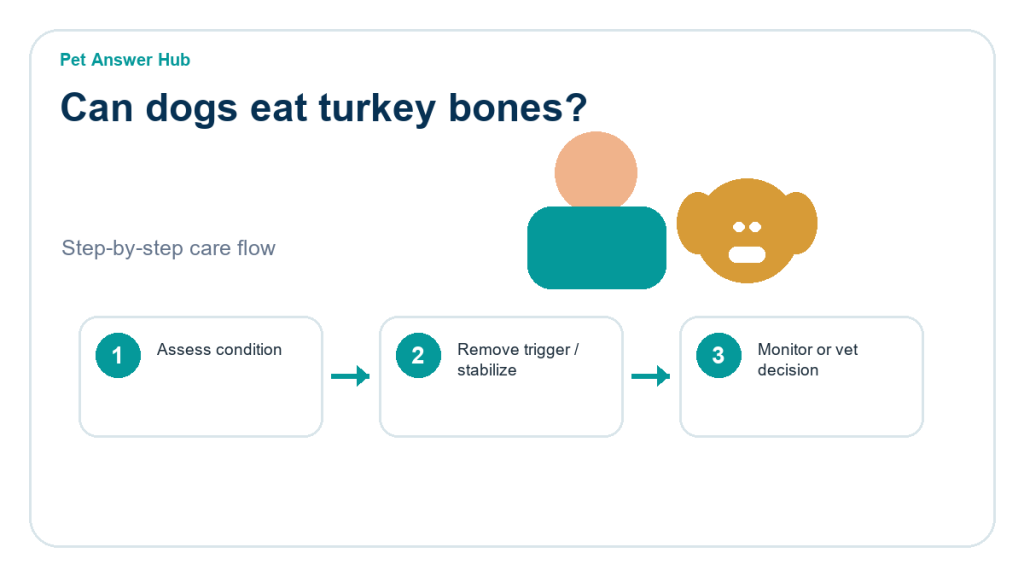
- Remove all bones and fragments immediately.
- Do not try to make your dog vomit unless a veterinarian instructs you.
- Estimate bone type, size, amount, and when it was eaten.
- Call a veterinarian or emergency clinic for guidance, especially with cooked bones or symptoms.
Vet Guidance
- Contact a vet urgently if your dog ate cooked bones, sharp bones, or a large bone fragment.
- Emergency care is needed for choking, repeated vomiting, belly pain, constipation, bloody stool, weakness, or collapse.
- Monitoring may require professional guidance because blockage signs can appear later.
FAQ
Is can dogs eat turkey bones safe for dogs?
Can dogs eat turkey bones depends on the exact food, amount, preparation, ingredients, and your dog's size and health.
How much turkey bones can a dog eat?
If turkey bones is appropriate at all, keep it small and occasional. It should not replace complete balanced dog food.
What should I do if my dog ate turkey bones?
Check the amount, timing, ingredients, and your dog's symptoms. Remove more access and call a vet for toxic, bone, raw, fatty, or unknown exposures.
When should I call a vet about can dogs eat turkey bones?
Call a vet if the food contained toxic ingredients, cooked bones, raw or spoiled food, high fat, or if vomiting, diarrhea, weakness, tremors, pain, or collapse appears.
Can puppies or sick dogs eat turkey bones?
Puppies, seniors, and dogs with pancreatitis, diabetes, kidney disease, allergies, obesity, or digestive problems need veterinary diet advice before new foods.
Disclaimer
Pet Answer Hub provides general informational content only. It cannot diagnose your pet, replace a veterinarian, or provide emergency medical advice. If your pet seems very sick, is in pain, has trouble breathing, collapses, has repeated vomiting, or you are unsure, contact a veterinarian or emergency clinic promptly.