
Quick Answer
Why are my cat's eyes watery and squinting? This sign can be mild, but it can also point to pain, infection, stress, toxin exposure, or another health problem. Watch the severity, duration, and any additional symptoms.
Severity
Causes
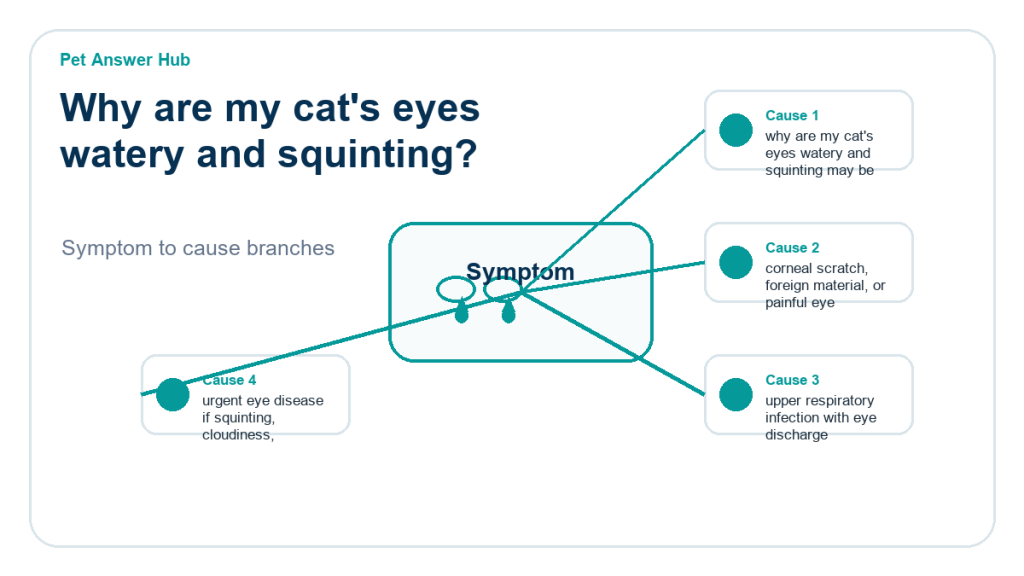
- why are my cat's eyes watery and squinting may be linked to mild irritation or temporary stress
- diet change, pain, infection, or inflammation
- underlying disease if signs are repeated or worsening
- urgent illness if severe symptoms appear
Action Steps
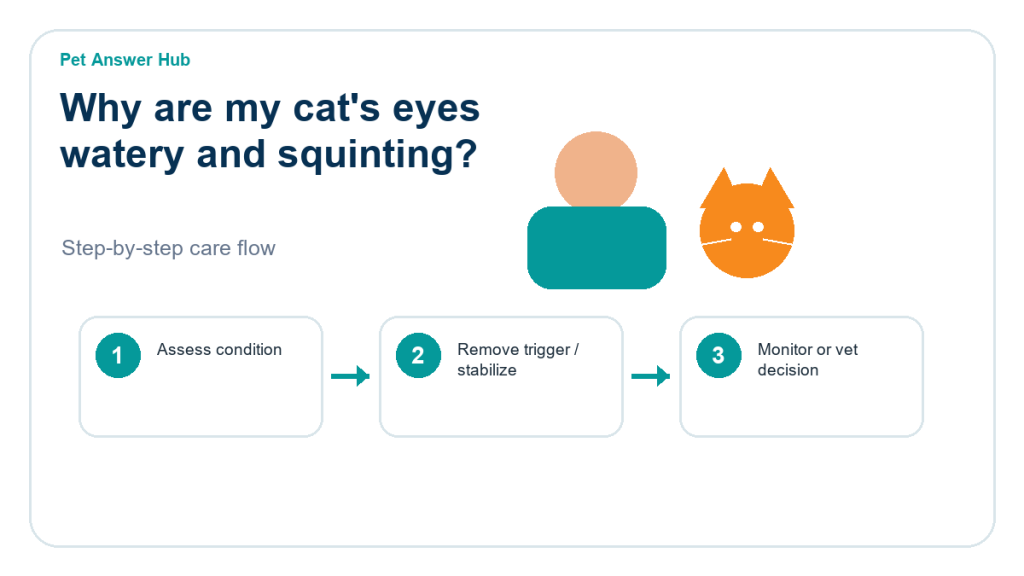
- Check your cat's appetite, energy, pain level, breathing, and litter box behavior.
- Remove possible irritants or triggers, and keep your cat calm and indoors.
- Do not give human medicine or attempt painful home treatment.
- Contact a veterinarian if the sign is severe, repeated, worsening, or paired with other concerning symptoms.
Vet Guidance
- See a vet promptly if your cat is squinting, pawing at the eye, or keeping the eye closed.
- Urgent care is needed for cloudy eyes, swelling, trauma, thick discharge, or sudden vision changes.
- Do not wait if only one eye is painful or symptoms worsen quickly.
FAQ
Is why are my cat's eyes watery and squinting serious?
Why are my cat's eyes watery and squinting can be mild, but it becomes more serious when it is repeated, worsening, or paired with weakness, pain, blood, or breathing changes.
When should I worry about watery eyes in my cat?
Worry if the symptom lasts more than 24 hours, happens repeatedly, or appears with vomiting, diarrhea, hiding, lethargy, blood, or fast breathing.
How long does watery eyes usually last in cats?
Mild short-term signs may improve within a day, but persistent or worsening signs should be checked by a veterinarian.
What can I check at home for why are my cat's eyes watery and squinting?
Check breathing, gum color, energy, appetite, water intake, urination, stool, pain level, and whether the symptom is improving or worsening.
Can why are my cat's eyes watery and squinting be an emergency?
Yes. It can be an emergency with collapse, pale gums, breathing trouble, severe pain, repeated vomiting, seizures, heavy bleeding, or rapid decline.
Disclaimer
Pet Answer Hub provides general informational content only. It cannot diagnose your pet, replace a veterinarian, or provide emergency medical advice. If your pet seems very sick, is in pain, has trouble breathing, collapses, has repeated vomiting, or you are unsure, contact a veterinarian or emergency clinic promptly.