
Quick Answer
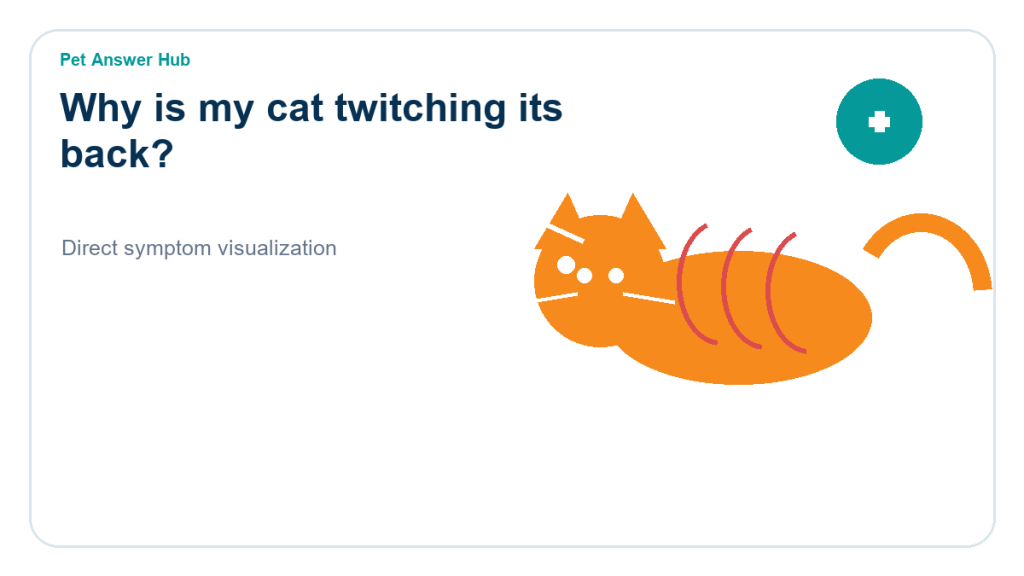
Why is my cat twitching its back can be related to skin sensitivity, fleas, itch, stress, pain, or feline hyperesthesia-like episodes. Monitor closely, but contact a vet if twitching is frequent, intense, painful, or paired with aggression or self-biting.
Severity
Causes
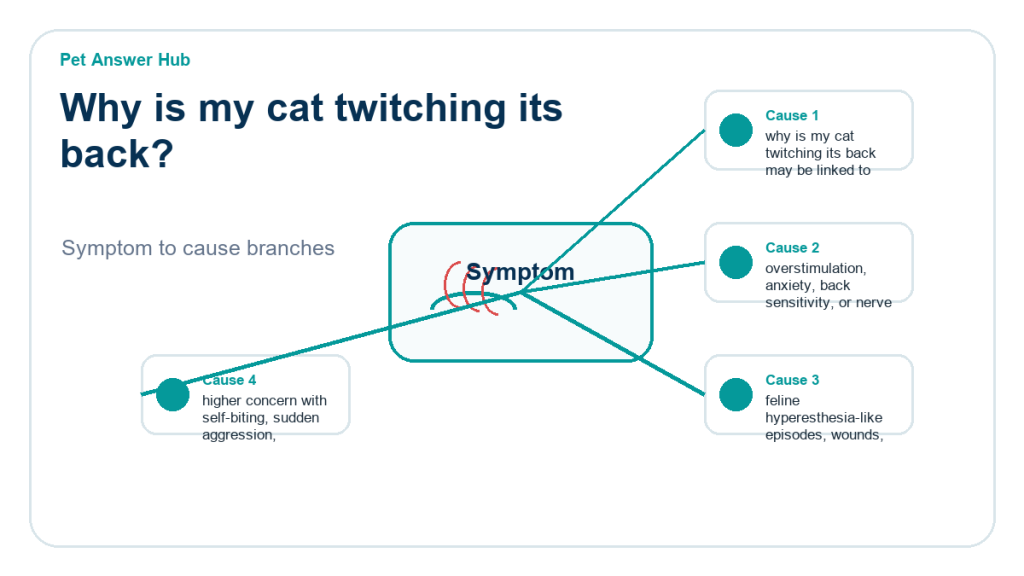
- why is my cat twitching its back may be linked to skin irritation, fleas, allergy, stress, or pain
- overstimulation, anxiety, back sensitivity, or nerve discomfort
- feline hyperesthesia-like episodes, wounds, or muscle spasms
- higher concern with self-biting, sudden aggression, seizures, or repeated episodes
Action Steps
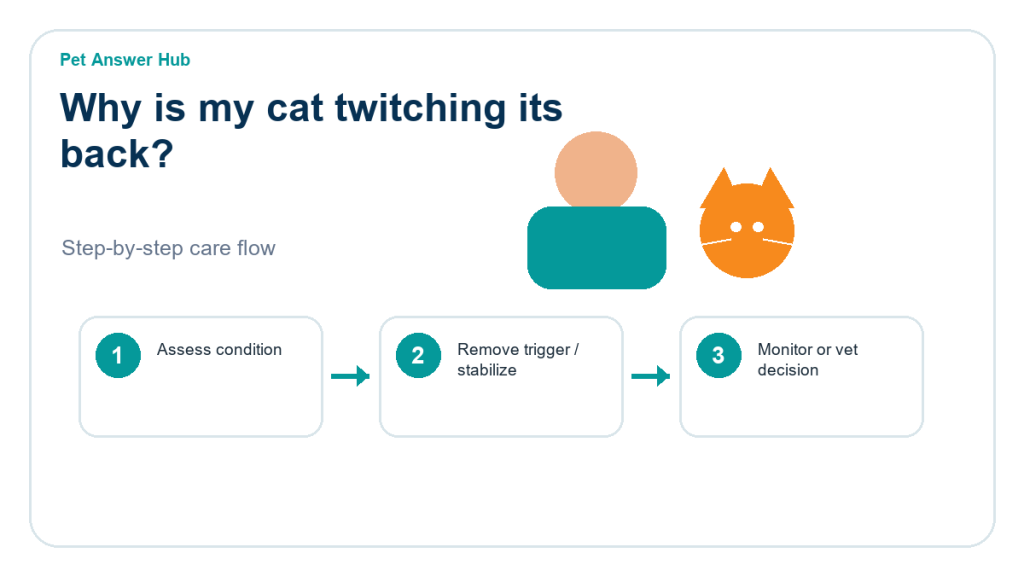
- Check whether the behavior started suddenly and note the time, trigger, and duration.
- Look for medical signs such as appetite change, hiding, vomiting, diarrhea, pain, breathing changes, or litter box changes.
- Reduce stress by giving your cat a quiet space, clean litter boxes, fresh water, and distance from triggers.
- Contact a veterinarian if the behavior is intense, repeated, worsening, or paired with health changes.
Vet Guidance
- See a vet if back twitching is frequent, intense, painful, or causes biting or skin damage.
- Urgent care is needed if twitching looks seizure-like or appears with collapse or confusion.
- Track triggers such as petting, noise, stress, grooming, or flea exposure.
FAQ
Is why is my cat twitching its back serious?
Why is my cat twitching its back can be mild in some contexts, but it becomes more serious when it is sudden, repeated, intense, or paired with appetite loss, hiding, pain, breathing changes, or litter box changes.
When should I worry about skin twitch in my cat?
Worry if the behavior is new, worsening, hard to interrupt, linked to pain, or appears with vomiting, diarrhea, weakness, blood, straining, or breathing trouble.
Can stress cause why is my cat twitching its back?
Yes. Stress, fear, routine changes, new pets, visitors, noise, or litter box changes can trigger behavior changes, but medical causes should be considered when the behavior is sudden or unusual.
What should I check at home for why is my cat twitching its back?
Check appetite, water intake, urination, stool, breathing, gum color, energy, pain, mobility, skin, and whether the behavior happens around a specific trigger.
Should I call a vet for why is my cat twitching its back?
Call a vet if the behavior persists, repeats, escalates, or appears with any physical symptom. Seek urgent care for breathing distress, head pressing, collapse, severe pain, or inability to urinate.
Disclaimer
Pet Answer Hub provides general informational content only. It cannot diagnose your pet, replace a veterinarian, or provide emergency medical advice. If your pet seems very sick, is in pain, has trouble breathing, collapses, has repeated vomiting, or you are unsure, contact a veterinarian or emergency clinic promptly.