Quick Answer
Can cats eat bread? Plain baked bread is usually low concern in a tiny amount, but it is not useful nutrition for cats. Avoid raw dough, raisin bread, garlic bread, sweetened bread, and large portions.
Severity
Causes
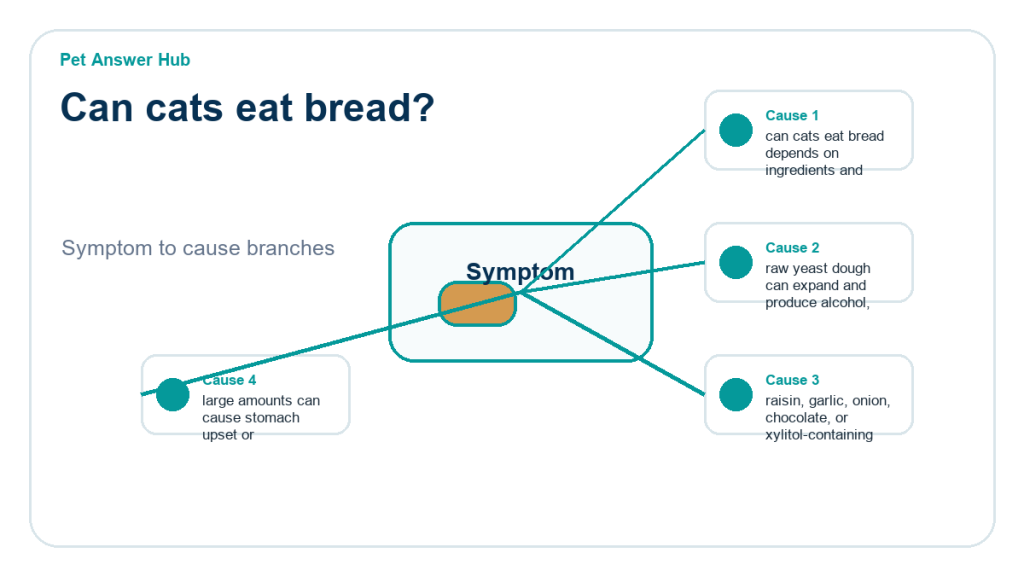
- can cats eat bread depends on ingredients and whether it is fully baked
- raw yeast dough can expand and produce alcohol, which is dangerous
- raisin, garlic, onion, chocolate, or xylitol-containing bread is unsafe
- large amounts can cause stomach upset or unnecessary calories
Action Steps
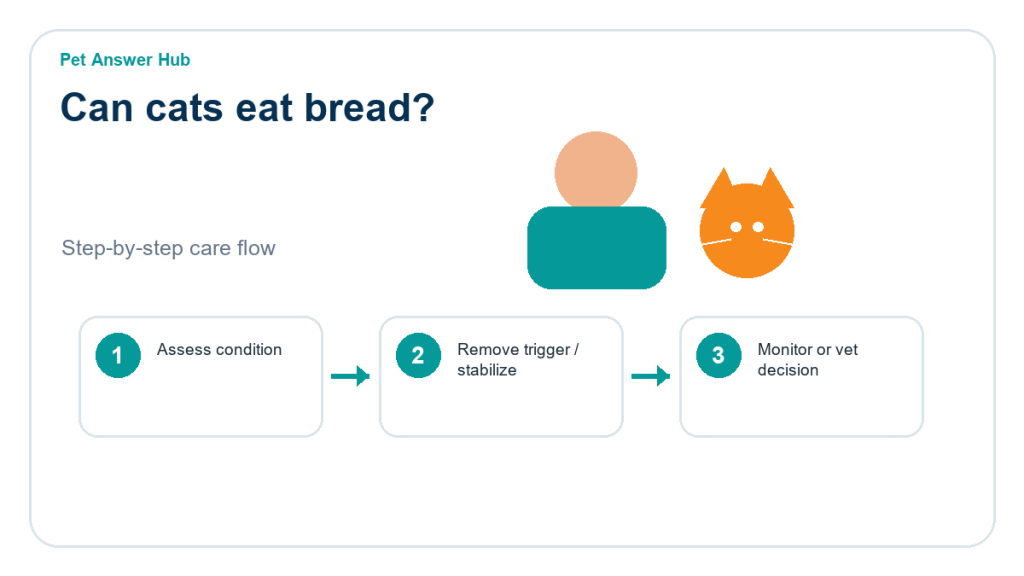
- Check the bread ingredients before deciding whether it was risky.
- Remove access to raw dough, raisin bread, garlic bread, chocolate bread, or sweetened bread.
- Monitor for vomiting, bloating, weakness, diarrhea, or unusual behavior.
- Call a vet if raw dough or unsafe ingredients were eaten.
Vet Guidance
- Emergency care is needed for raw yeast dough, raisin bread, xylitol, chocolate, onion, or garlic exposure.
- Call a vet if bloating, repeated vomiting, weakness, or disorientation appears.
- Plain baked bread in a tiny amount is usually low concern if your cat acts normal.
FAQ
Is bread safe for cats?
Bread may be tolerated only in a tiny plain cooked amount, depending on ingredients and your cat's health.
How much bread can a cat eat?
Use only tiny portions for low-risk foods. For toxic foods, unsafe ingredients, or plant parts, there is no recommended serving and you should contact a veterinarian.
What symptoms should I watch for after my cat eats bread?
Watch for vomiting, diarrhea, drooling, belly pain, weakness, appetite loss, pale gums, collapse, or behavior changes.
When should I call a vet about bread?
Call a vet if the food is toxic, the amount is large, ingredients are unknown, or any symptoms appear.
Can kittens or senior cats eat bread?
Kittens, senior cats, small cats, and cats with medical problems can be more sensitive, so ask a veterinarian before offering questionable foods.
Disclaimer
Pet Answer Hub provides general informational content only. It cannot diagnose your pet, replace a veterinarian, or provide emergency medical advice. If your pet seems very sick, is in pain, has trouble breathing, collapses, has repeated vomiting, or you are unsure, contact a veterinarian or emergency clinic promptly.