Quick Answer
Can cats eat tuna? Plain, properly prepared food may be tolerated by some pets in small amounts, but safety depends on ingredients, portion size, and your cat's health. Avoid seasoned, fatty, spoiled, or mixed foods and monitor closely.
Severity
Causes
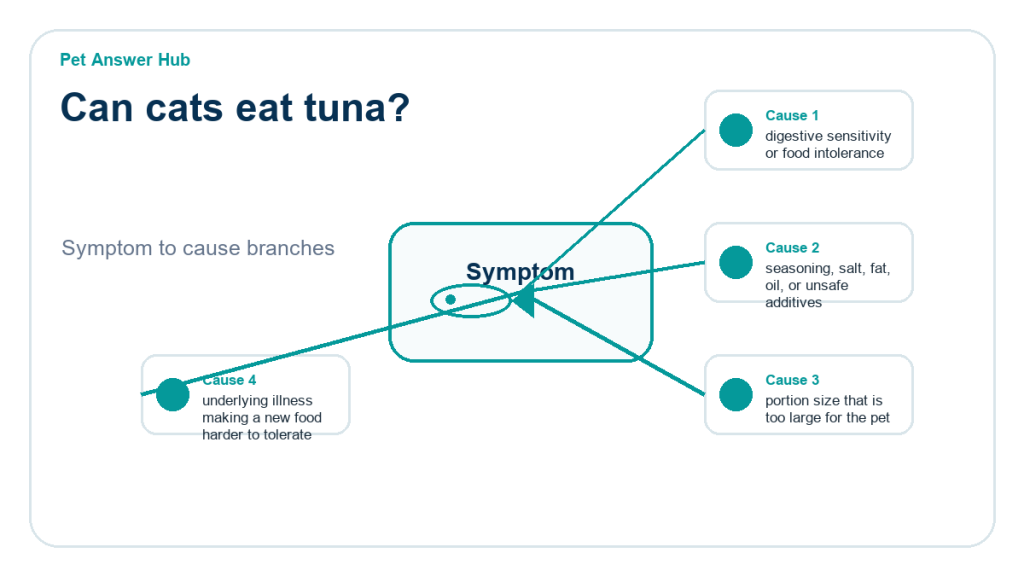
- can cats eat tuna may be linked to mild irritation or temporary stress
- diet change, pain, infection, or inflammation
- underlying disease if signs are repeated or worsening
- urgent illness if severe symptoms appear
Action Steps
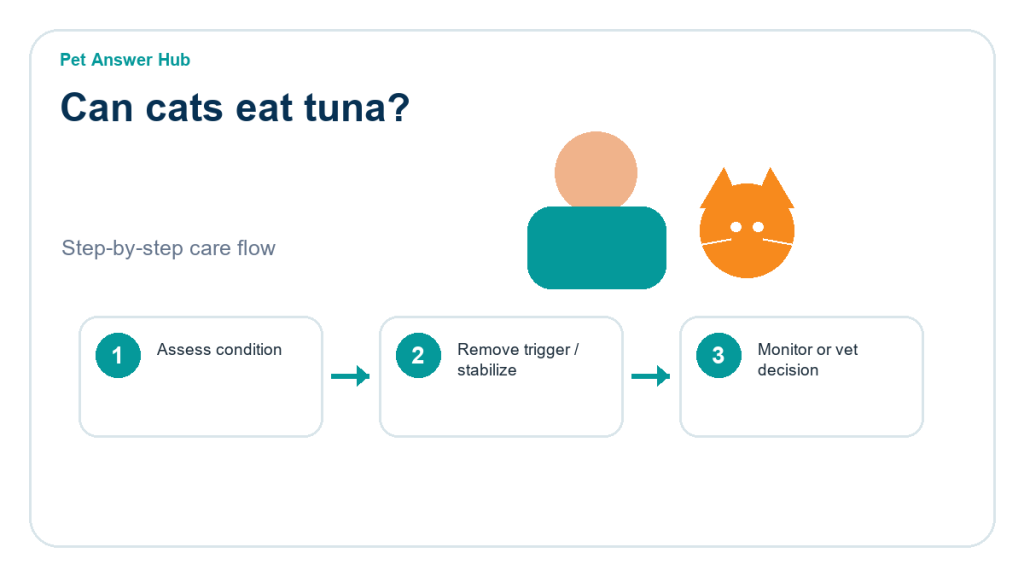
- Assess how much tuna your cat ate, when it happened, and whether it was plain or mixed with unsafe ingredients.
- Remove the food and prevent further access.
- Monitor for vomiting, diarrhea, drooling, weakness, tremors, belly pain, appetite loss, or behavior changes.
- Contact a veterinarian or poison helpline quickly if the food is toxic, the amount is unknown, or symptoms appear.
Vet Guidance
- Call a vet if vomiting, diarrhea, weakness, belly pain, drooling, tremors, or appetite loss occurs.
- Seek urgent care if the food contained toxic ingredients such as chocolate, grapes, onions, garlic, xylitol, or alcohol.
- Contact a vet sooner for very young, senior, pregnant, or medically fragile pets.
FAQ
Is tuna safe for cats?
Tuna may be safe only in specific plain forms and small amounts, but toxic ingredients, seasoning, fat, or bones can make it risky.
When should I worry after my cat ate tuna?
Worry if vomiting, diarrhea, drooling, tremors, weakness, belly pain, appetite loss, or behavior changes appear.
How long after eating tuna can symptoms start?
Some symptoms can start within hours, while others take longer. Known toxic foods should not be monitored casually.
What should I do if my cat ate too much tuna?
Remove access, estimate the amount, check ingredients, and call a veterinarian if the amount is large or symptoms appear.
Can tuna replace normal cat food?
No. Treat foods should not replace a complete balanced diet formulated for your pet.
Disclaimer
Pet Answer Hub provides general informational content only. It cannot diagnose your pet, replace a veterinarian, or provide emergency medical advice. If your pet seems very sick, is in pain, has trouble breathing, collapses, has repeated vomiting, or you are unsure, contact a veterinarian or emergency clinic promptly.