
Quick Answer
Why is my cat shaking while sleeping may be caused by fear, cold, pain, fever, nausea, muscle tremors, toxin exposure, or seizure activity. Shaking after touch, while sleeping, or with appetite loss, weakness, vomiting, or abnormal behavior should be monitored closely and may need veterinary care.
Severity
Causes
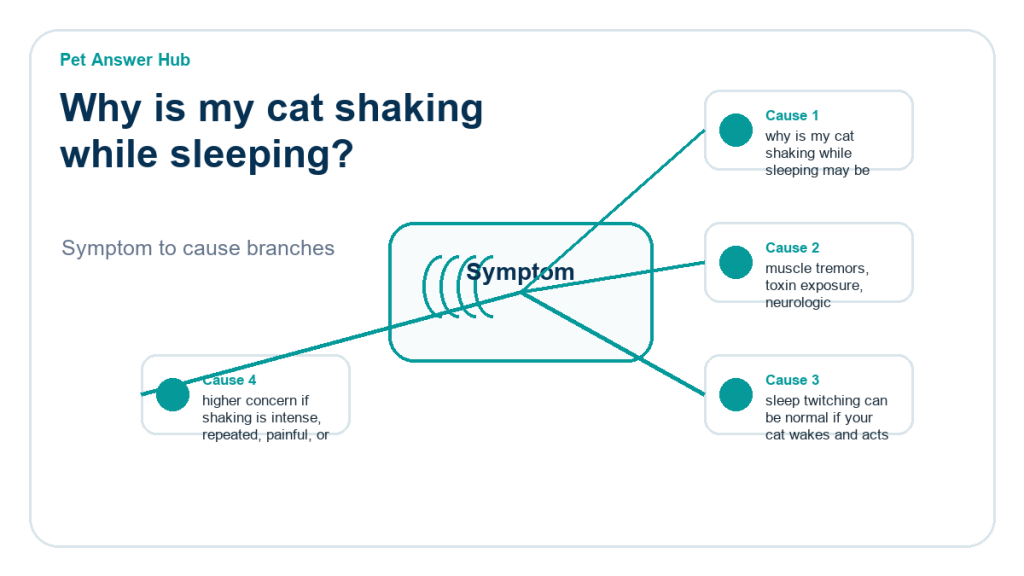
- why is my cat shaking while sleeping may be linked to fear, cold, stress, pain, fever, or nausea
- muscle tremors, toxin exposure, neurologic problems, or seizure-like activity
- sleep twitching can be normal if your cat wakes and acts normal
- higher concern if shaking is intense, repeated, painful, or paired with weakness or appetite loss
Action Steps
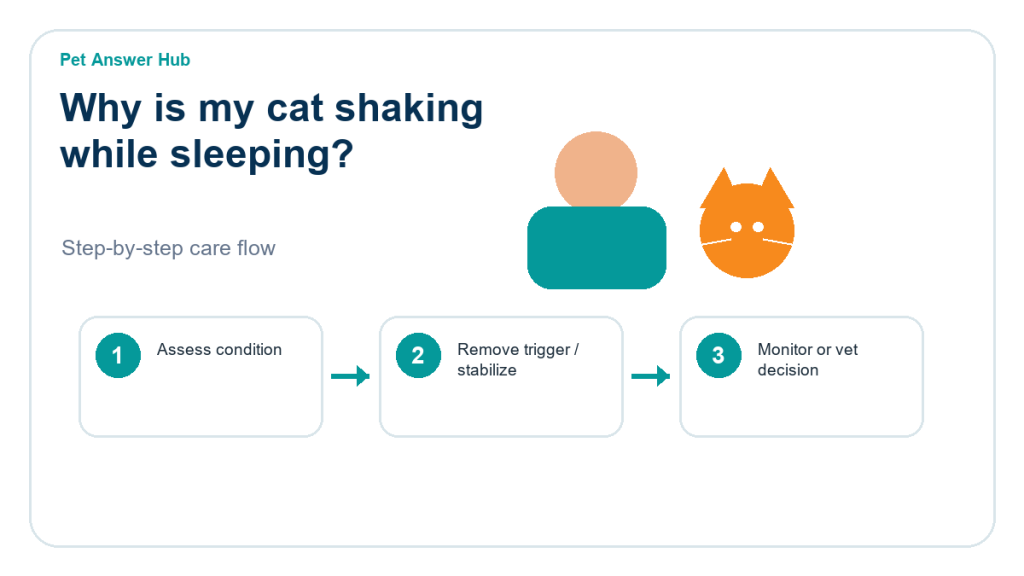
- Note whether shaking happens during sleep, after touch, after eating, during stress, or while awake.
- Keep your cat warm, calm, and away from possible toxins or unknown substances.
- Check appetite, gait, pain, vomiting, breathing, gum color, and whether your cat can respond normally.
- Contact a veterinarian if shaking repeats, worsens, or appears with pain, weakness, or not eating.
Vet Guidance
- See a vet if shaking is repeated, intense, painful, or happens while your cat is awake and abnormal.
- Urgent care is needed for seizures, collapse, toxin exposure, severe weakness, vomiting, or trouble breathing.
- If shaking occurs only during sleep and your cat wakes normally, record a video and monitor for changes.
FAQ
Is why is my cat shaking while sleeping serious?
Why is my cat shaking while sleeping can be serious if it is sudden, repeated, worsening, or paired with not eating, hiding, vomiting, weakness, breathing changes, pain, or abnormal behavior.
When should I worry about shaking in my cat?
Worry if the sign happens at rest, lasts more than a short period, keeps returning, or appears with appetite loss, lethargy, vomiting, pain, or litter box changes.
What should I check at home for why is my cat shaking while sleeping?
Check breathing, appetite, water intake, litter box output, gum color, energy, pain, vomiting, hiding, walking, and whether the symptom is improving or worsening.
How long should I monitor shaking before calling a vet?
Mild signs can sometimes be watched briefly, but breathing problems, repeated vomiting, not eating, toxin exposure, or abnormal behavior should not be casually monitored.
Can why is my cat shaking while sleeping be an emergency?
Yes. It can be an emergency with labored breathing, open-mouth breathing, repeated vomiting, collapse, toxin exposure, seizures, severe weakness, or abnormal pupils with strange behavior.
Disclaimer
Pet Answer Hub provides general informational content only. It cannot diagnose your pet, replace a veterinarian, or provide emergency medical advice. If your pet seems very sick, is in pain, has trouble breathing, collapses, has repeated vomiting, or you are unsure, contact a veterinarian or emergency clinic promptly.