
Quick Answer
Why is my dog panting and pacing at night can be caused by anxiety, pain, overheating, heart or breathing problems, or abdominal distress. It is urgent if your dog is bloated, weak, pale, coughing, collapsing, or cannot settle.
Severity
Causes
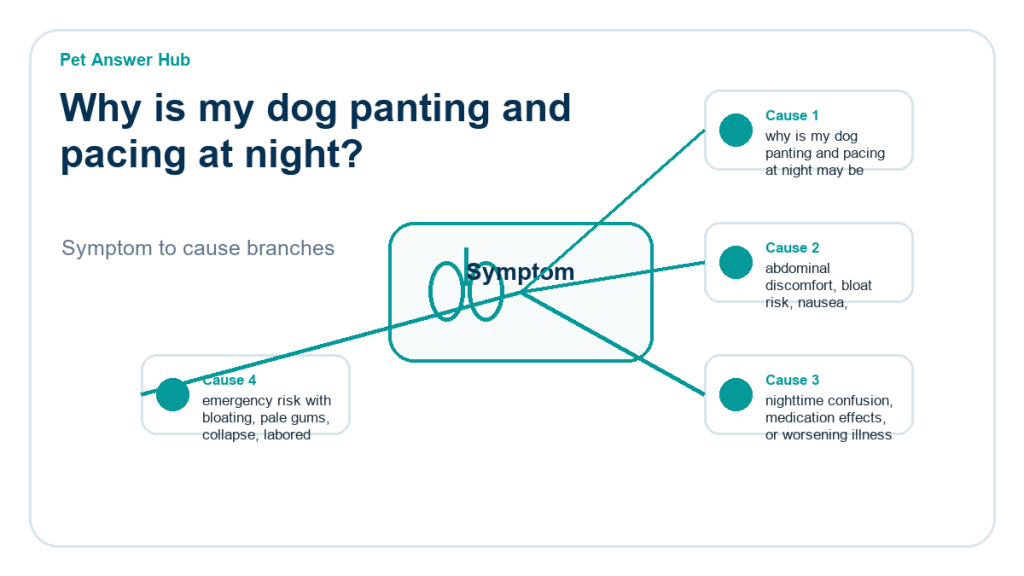
- why is my dog panting and pacing at night may be linked to pain, anxiety, heat stress, heart disease, or breathing difficulty
- abdominal discomfort, bloat risk, nausea, restlessness, or injury
- nighttime confusion, medication effects, or worsening illness
- emergency risk with bloating, pale gums, collapse, labored breathing, or repeated retching
Action Steps
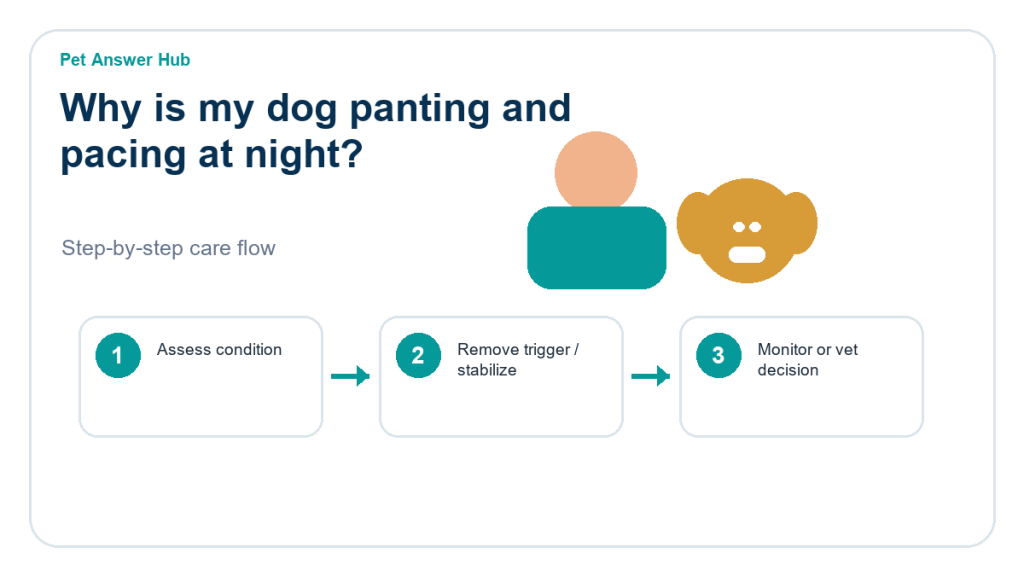
- Keep your dog calm and restrict activity while you assess breathing, gum color, belly shape, alertness, and pain.
- Remove immediate triggers such as heat, noise, food access, or stressful interaction.
- Call an emergency veterinarian now if there is bloating, collapse, labored breathing, head pressing, pale gums, or severe weakness.
- Take a short video only if it does not delay urgent care.
Vet Guidance
- Go to an emergency vet if panting and pacing appear with bloating, retching, weakness, pale gums, collapse, or labored breathing.
- See a vet promptly if nighttime restlessness is new, repeated, or paired with pain, coughing, or appetite loss.
- Keep your dog calm and avoid exercise while assessing breathing and belly shape.
FAQ
Is why is my dog panting and pacing at night serious?
Why is my dog panting and pacing at night can be mild in some contexts, but it becomes more serious when it is sudden, repeated, intense, unsafe, or paired with appetite loss, pain, breathing changes, vomiting, diarrhea, or weakness.
When should I worry about urgent restless in my dog?
Worry if the behavior escalates, causes injury, repeats often, appears suddenly, or comes with collapse, bloating, pale gums, limping, house soiling, or major appetite changes.
Can stress cause why is my dog panting and pacing at night?
Yes. Stress, fear, schedule changes, separation, noise, new people, or other dogs can trigger behavior changes, but medical causes should be considered when the behavior is new or unusual.
What should I check at home for why is my dog panting and pacing at night?
Check breathing, gum color, belly size, appetite, water intake, stool, urination, mobility, skin, paws, pain, and whether a clear trigger happened first.
Should I call a vet for why is my dog panting and pacing at night?
Call a vet if the behavior persists, repeats, escalates, or appears with any physical symptom. Seek urgent care for bloating, breathing distress, collapse, head pressing, severe pain, or toxin exposure.
Disclaimer
Pet Answer Hub provides general informational content only. It cannot diagnose your pet, replace a veterinarian, or provide emergency medical advice. If your pet seems very sick, is in pain, has trouble breathing, collapses, has repeated vomiting, or you are unsure, contact a veterinarian or emergency clinic promptly.