Quick Answer
Can dogs eat beef? Plain cooked beef may be safe for some dogs in small amounts, but fatty cuts, seasoning, bones, sauces, and large portions can cause digestive upset or pancreatitis risk.
Severity
Causes
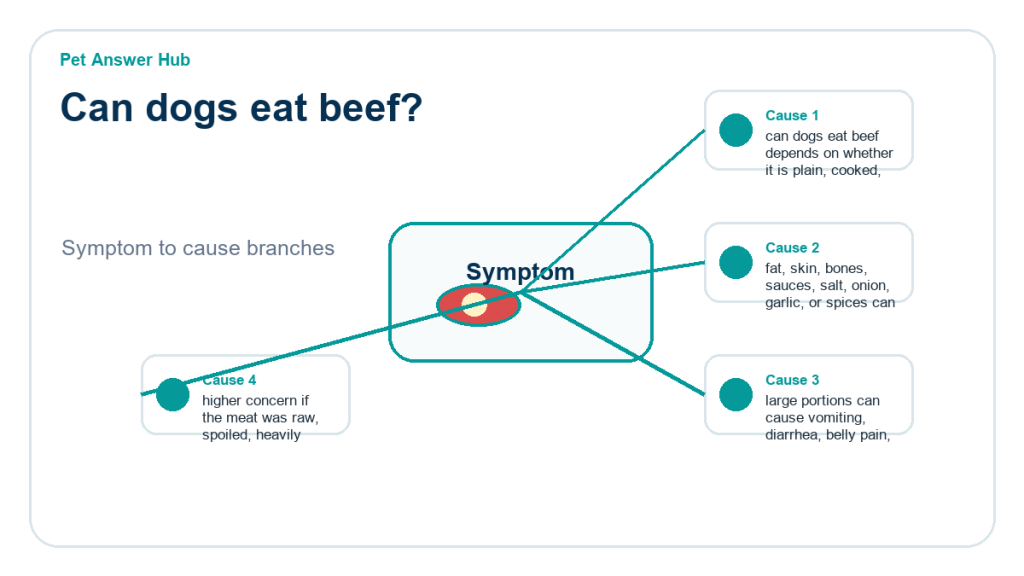
- can dogs eat beef depends on whether it is plain, cooked, lean, boneless, and unseasoned
- fat, skin, bones, sauces, salt, onion, garlic, or spices can make it unsafe
- large portions can cause vomiting, diarrhea, belly pain, or pancreatitis risk
- higher concern if the meat was raw, spoiled, heavily seasoned, or contained bones
Action Steps
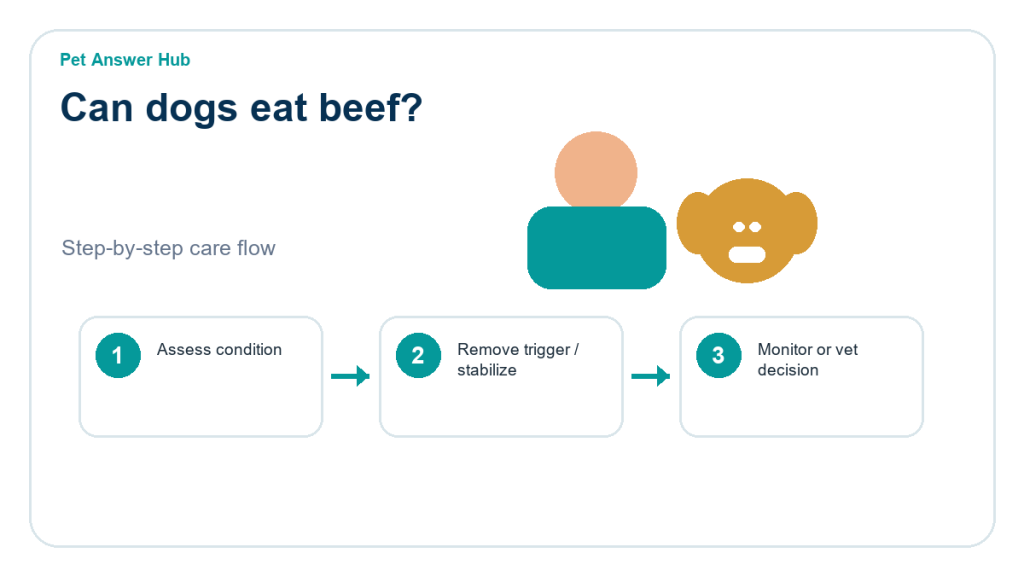
- Offer only a small amount of plain cooked beef if appropriate.
- Remove bones, fat, skin, sauces, salt, onion, garlic, and seasoning.
- Do not feed raw, spoiled, fried, or heavily seasoned meat.
- Monitor for vomiting, diarrhea, belly pain, lethargy, or appetite changes.
Vet Guidance
- Call a vet if your dog ate bones, spoiled meat, raw meat, a large fatty portion, or seasoning with onion or garlic.
- Urgent care is needed for repeated vomiting, belly pain, bloating, weakness, or collapse.
- Dogs with pancreatitis history should avoid fatty meats unless a vet approves.
FAQ
Is beef safe for dogs?
Beef may be tolerated by some dogs only in specific plain forms and small amounts.
How much beef can a dog eat?
Use very small portions for low-risk foods. For toxic foods or unsafe ingredients, there is no recommended serving and you should contact a veterinarian.
What symptoms should I watch for after my dog eats beef?
Watch for vomiting, diarrhea, drooling, belly pain, weakness, tremors, appetite loss, pale gums, collapse, or behavior changes.
When should I call a vet about beef?
Call a vet if the food is toxic, the amount is large, ingredients are unknown, or any symptoms appear.
Can puppies or senior dogs eat beef?
Puppies, senior dogs, small dogs, and dogs with medical problems can be more sensitive, so ask a veterinarian before offering questionable foods.
Disclaimer
Pet Answer Hub provides general informational content only. It cannot diagnose your pet, replace a veterinarian, or provide emergency medical advice. If your pet seems very sick, is in pain, has trouble breathing, collapses, has repeated vomiting, or you are unsure, contact a veterinarian or emergency clinic promptly.